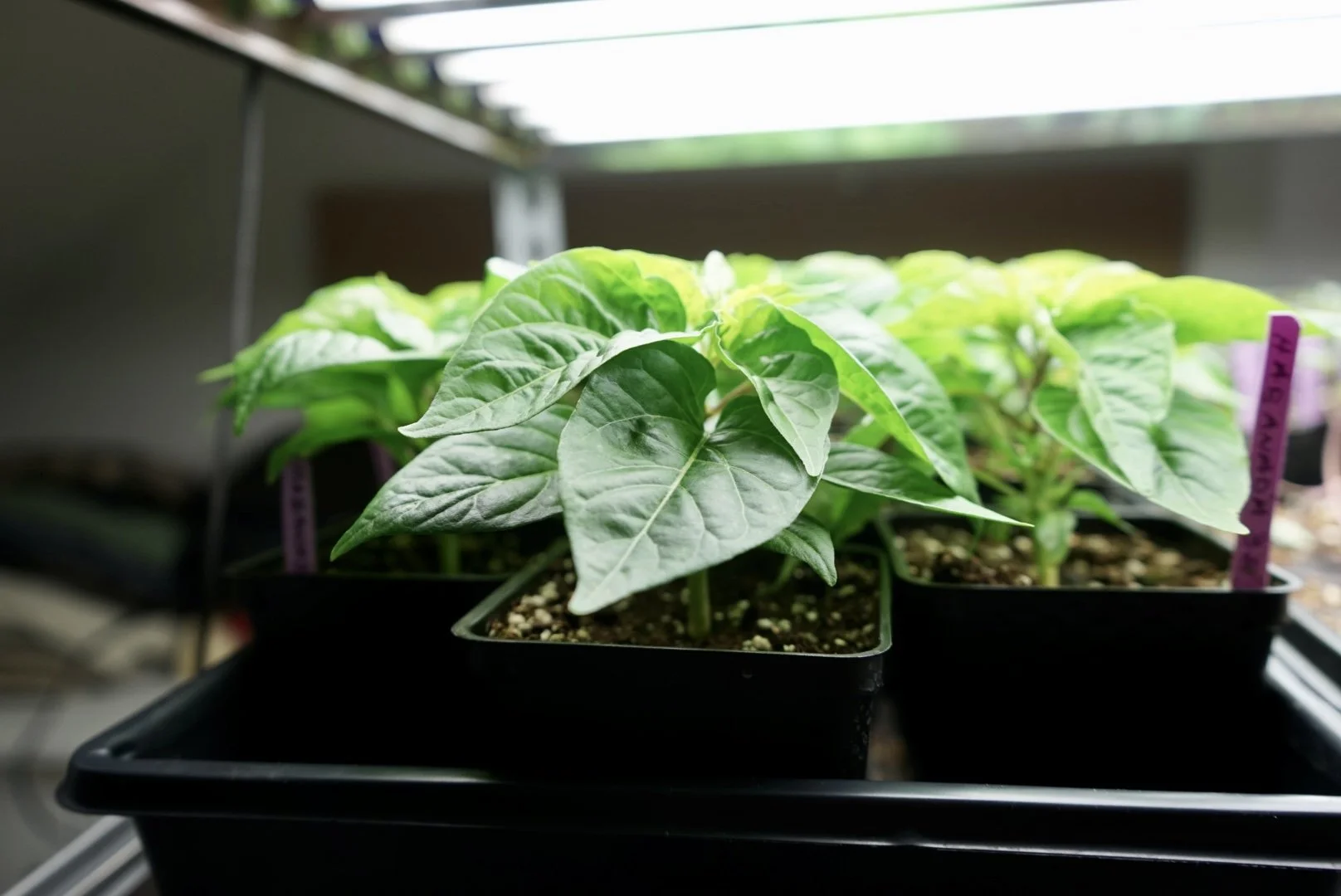


Watering Deep vs. Watering often
Water new plants slowly and deeply at the base to fully saturate the root ball and surrounding soil. Light surface watering is often not enough. Avoid flooding plants all at once — move through different areas and return again as moisture has time to move downward into the soil.

Give Plants Time + Space to Adjust
Some drooping, yellowing, or leaf loss can be normal while plants establish. Transplanting, changes in light, temperature fluctuations, and inconsistent moisture can all cause temporary stress as roots begin settling into the surrounding soil. Avoid excessive handling and allow airflow between plants so they can acclimate naturally.

Tend to Dead or Damaged Growth
Gently remove dead foliage, broken stems, and spent blooms to encourage healthy growth, improve airflow, and reduce stress on the plant. Clip right above new buds. Regular light cleanup helps direct energy toward new growth while supporting a cleaner, healthier garden overall.
Watch the Soil, Not Just the Surface
Different soils hold moisture differently. Heavy clay may look dry on top while remaining wet underneath, while sandy or amended soils can dry quickly. Before watering, check moisture a few inches below the surface whenever possible. Water deep, let it soak in, water again.

Enriched Mulch Supports Healthy Roots
A light layer of mulch or compost helps retain moisture and protect roots. Avoid thick, compacted mulch layers, which can prevent water from reaching plants and create conditions where weeds thrive. Leaving some softness also allows beneficial plants to naturally reseed over time.

Seasonal Follow-Ups Can Help
Even attentive home care can benefit from occasional professional check-ins to identify watering, spacing, or transplant stress early in the growing season. You can contribute what works for you and your body, and I can take care of the rest.